
<aside> ‼️ This manual was taken from the Church of the Highlands production team manuals and modified for our use.
</aside>
Microphones: one of the most basic and yet most necessary components of a sound system. Understanding a bit about microphone technology and their proper usage is key to obtaining the desired result. Using the right mic for the right job will determine the quality of your end product, whether live sound or a recording project.
The adage, “garbage in, garbage out” can definitely apply to microphone choice. If the first step in your signal chain is less than optimal, you will never regain the loss. Even with all of the fancy audio tools at our disposal, there is no substitution for the right mic coupled with proper placement. Does this mean expensive? In a word, NO! The best mic for the job does not have to mean the most expensive. Actually in most cases, two important parts of the equation for choosing the best microphone for the job is budget and mic type. So, let’s try to gain an understanding of different types of microphones and some of the best uses for each microphone type.
Then, with this knowledge, we will be better equipped to choose the right type of microphone for the application, and within a budget. Here is a handout listing a few of our staff’s favorite microphones for particular uses. You will also notice the type of each mic (Dynamic, Condenser, Ribbon).
In addition to what you will learn for your own benefit, you will also be equipped to help your worship team members properly use microphones. We will be covering a lot of info today, so please take notes!
The three primary types of professional microphones include the dynamic, condenser and ribbon.
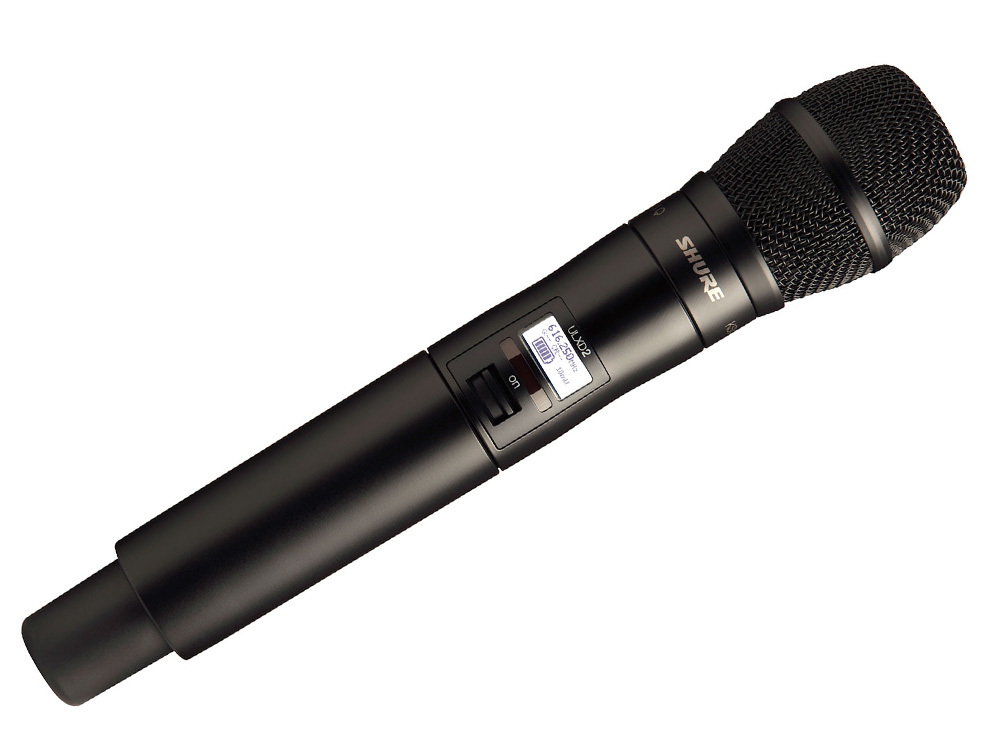

First we have a SHURE SM58, the world standard ”live” vocal dynamic microphone for the last few decades.
Next we have a wireless version of a SHURE KSM9, which is Shure’s premier vocal condenser microphone.
The third image Beyerdynamic M160, which is a end-address ribbon microphone which is commonly used for live performance and can be used for both vocal and instrument applications.
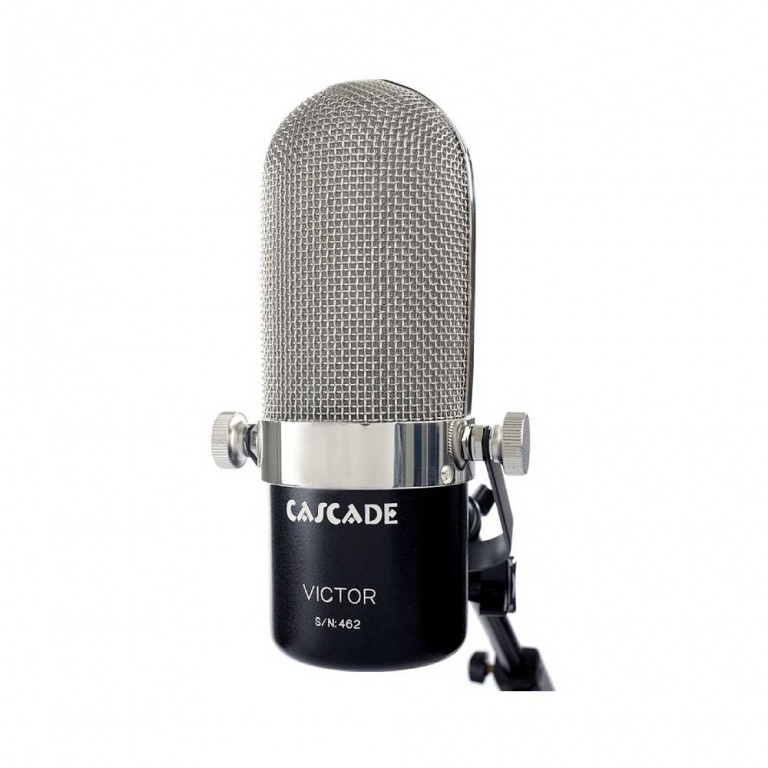
Finally, the Cascade VICTOR microphone is a large bi-directional side-address ribbon microphone. The Cascade microphone is primarily used in studio applications and is widely recognized for capturing electric guitar amps.
Dynamic mics create sound with a voice coil attached to the back of a diaphragm.
Condenser mics create sound with a metalized diaphragm which is one plate of a capacitor (an electronic circuit).
Dynamic mics are generally considered to have a “rugged” or “gutsy” sound
Condenser mics tend to produce a more natural sound and reproduce transients better.
Below you see a cross sections of a dynamic, condenser and a ribbon mic as illustrated in section 10 of the Yamaha Sound Reinforcement Handbook
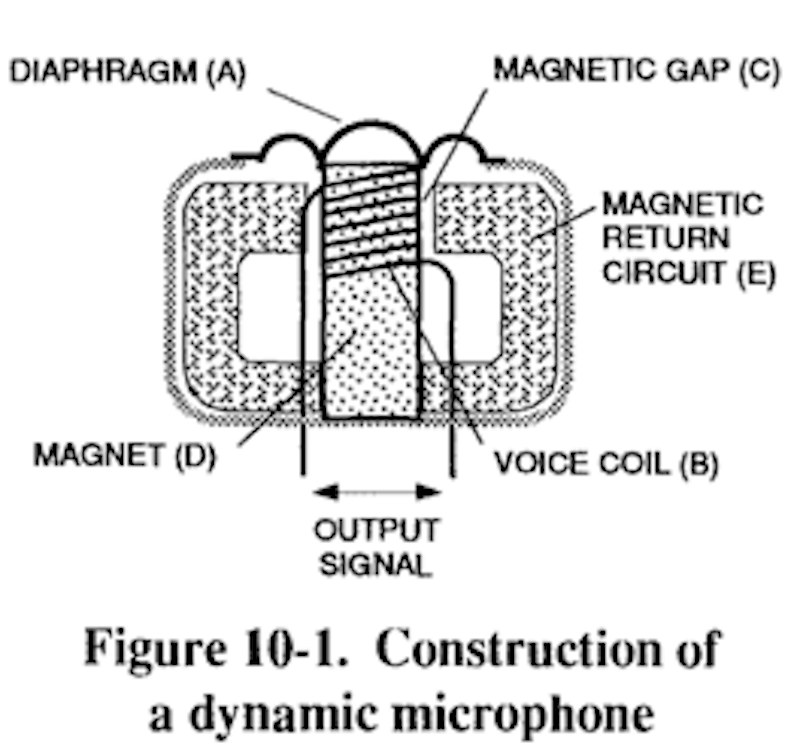
In a dynamic mic a flexibly-mounted diaphragm is coupled to a coil of fine wire. The coil is mounted in the air gap of a magnet such that it is free to move back and forth within the gap. When sound strikes the diaphragm, the diaphragm surface vibrates in response. The motion of the diaphragm couples directly to the coil, which moves back and forth in the field of the magnet. As the coil cuts through the lines of magnetic force in the gap, a small electrical current is induced in the wire. The magnitude and direction of that current is directly related to the motion of the coil, and the current thus is an electrical representation of the incident sound wave.